When we talk to prospective clients about custom software, the first reaction is usually the same: “that sounds expensive and complicated.” Sometimes it is. Other times it turns out to be the most sensible and cost-effective option in the medium term. The difference lies entirely in the use case.
This guide explains exactly what custom software is, how it differs from off-the-shelf solutions and — most importantly — how to know whether it’s the right investment for your business right now.
What custom software actually is
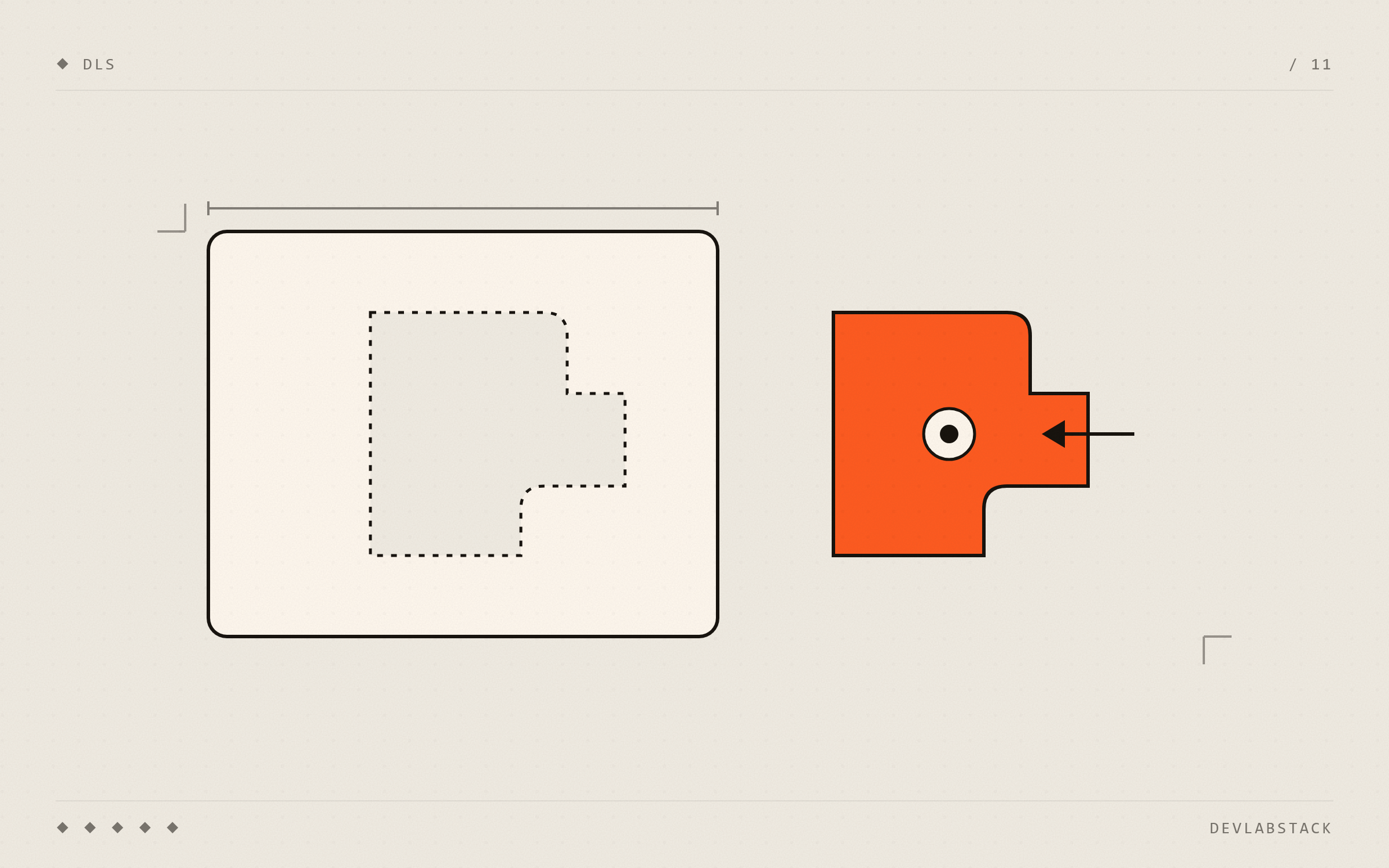
Custom software is a programme, application or system developed specifically for one company, with the goal of solving its concrete processes exactly as they work in that business. You don’t adapt your processes to the software — the software adapts to your processes.
It might be a web application, a mobile app, an internal management system, a sales platform, a customer portal or any combination. What defines it isn’t the technology it uses but its origin: it’s built from scratch for a specific client.
Off-the-shelf software — also called packaged software, COTS (Commercial Off-The-Shelf) or SaaS — is what you buy or subscribe to and use as it comes, adapting your processes to its logic. Tools like Salesforce, SAP, HubSpot, Shopify or any market ERP are off-the-shelf software.
Both options have their place. The key is knowing which one fits your situation.
The real difference between the two
Off-the-shelf software is designed for 80% of the needs of 80% of companies in a sector. It’s powerful, well-tested and has a mature support ecosystem. For everything within that 80%, it’s an excellent choice.
The problem arises with the remaining 20%: the processes that are specific to your business, the pricing logic that’s unique to your sector, the approval flow with five exceptions, the report that no standard software can generate the way you need it.
When that 20% is critical to the business, companies have two options:
-
Adapt processes to the standard software. Sometimes this is perfectly reasonable and efficient. Other times it means giving up real competitive advantages or adding so much manual work around the system that the benefit disappears.
-
Build what they need. More initial investment, but the result is exactly what the business requires.
When custom software makes sense
Your processes are genuinely unique
There are sectors and businesses where the processes are specific enough that no standard software covers them well. A manufacturing company with a particularly complex production order logic, a professional services firm with its own workflow, a service business with a pricing structure built around multiple parameters.
If you’ve tried several standard solutions and none of them fit without forcing your processes uncomfortably, you’re probably in this category.
The total cost of standard software is higher than it appears
A SaaS price looks low at first: €50, €200, €500 per month. But you need to calculate the real cost over three or five years, adding up:
- Monthly fee × months of use.
- Additional modules you need.
- Integrations with other systems (often requiring custom development on top of the platform).
- Hours of manual work the system doesn’t cover.
- The cost of limitations: what you can’t do because the software won’t allow it.
In many cases, a three-year analysis makes custom development more cost-effective — especially when usage volume is high or the gaps the standard software leaves create constant friction.
You need to integrate systems that don’t talk to each other
Companies often end up with an ecosystem of tools not designed to work together: an ERP, a CRM, an online store, a project management tool, an invoicing system. Connecting them with standard integrations works up to a point.
When the business logic required in those connections is complex — conditional synchronisation, data transformation, approval flows in the integration — it sometimes makes more sense to build a central system than to keep accumulating fragile integrations on top of each other.
Vendor dependency is a strategic risk
If your business depends entirely on software controlled by a third party, that third party can raise prices, change terms, discontinue features or simply disappear. With custom software, the code is yours. You can change development providers, evolve the system as needed and you’re not subject to anyone else’s product decisions.
Volume or performance exceeds what SaaS handles well
Standard platforms are optimised for typical use cases. When data volume, number of users or performance requirements exceed that band, costs spike or performance degrades. A well-designed proprietary platform can scale precisely to your actual needs.
When custom software is NOT the answer
Being honest here matters as much as in the previous section.
If you’re validating a business model, custom software is almost always the wrong choice. Before investing in a proprietary system you need to know the business works, that there’s demand and that the processes are stable. A standard tool or even a well-designed manual process is enough for the validation phase.
If your processes are completely standard, there’s no point building what already exists and is proven. A hospitality business, a consultancy that manages projects conventionally or an e-commerce with a standard catalogue has proven market solutions that will be faster and cheaper than any custom development.
If you don’t have capacity to maintain it, custom software requires ongoing maintenance: security updates, adjustments when external integrations change, functional improvements. If you have no internal technical team and no budget for external maintenance, a managed solution is more prudent.
Most common types of custom software in businesses
- Proprietary ERP or management systems: for companies whose operations don’t fit standard market ERPs.
- Customer portals: private areas where clients access their contracts, orders, documents or project status.
- B2B e-commerce platforms: stores for distributors or corporate customers with custom pricing, credit limits and approval flows.
- Field apps for employees: digitising job sheets, inspections, reports or route management.
- Internal automation systems: automated workflows connecting multiple systems to eliminate manual work.
- Digital product platforms: when the software itself is the product the company sells or delivers to its clients.
How much does it cost and how long does it take?
Pricing by plan according to project complexity:
| Plan | What’s included | Starting price |
|---|---|---|
| Pro | Custom web application, REST API, admin dashboard, 2 integrations | €1,500 |
| Business | Full platform, ERP or mobile app with cloud and CI/CD | €4,500 |
| Enterprise | Large-scale projects, microservices, custom SLA and dedicated team | Custom quote |
The final cost depends on functional complexity, the number of integrations and whether the project starts from scratch or modernises an existing system. A first discovery meeting allows for a much more accurate estimate before any commitment.
How to choose the right provider
Custom software is a long-term relationship, not a one-off purchase. Before signing, these questions are worth asking:
- Do I own the source code? You always should. If the provider retains the code, you’re locked in.
- Do you use standard, well-documented technologies? Proprietary or exotic frameworks increase dependency risk.
- What does the discovery process look like? A provider who doesn’t invest time in understanding the business before quoting cannot give a reliable estimate.
- Do you have experience in my sector or similar projects? Not essential, but it reduces the learning curve.
- Do you offer maintenance and support after launch? Software that isn’t maintained ages quickly.
If you have a process in mind that you think could be solved with custom software and want an honest assessment of whether it makes sense in your case, tell us about it. In a first no-commitment call we’ll tell you whether custom development is the right option — or whether there’s a simpler solution that solves the same problem.