We’ve already covered what custom software is and when it’s worth it. This article goes one step further: what concrete advantages a business actually gets from building its own software, and what the process of building it looks like in practice — from the first conversation to a system in production.
The real advantages, not the marketing ones
Any provider will tell you custom software “adapts to your business.” True, but too generic to base a decision on. These are the concrete advantages we see repeat across the projects we build:
The software reflects your process, not the other way around
With off-the-shelf software, every month you accumulate parallel spreadsheets, manual steps and “exceptions” the system doesn’t handle. With custom software, those exceptions are part of the design from day one. The result: less manual work, fewer human errors, and a team that uses the system instead of fighting it.
It’s actually yours
The source code belongs to you. You’re not paying a recurring licence for the right to use something you’ll never own, you don’t depend on a third party keeping a feature you rely on alive, and you can switch development providers without losing anything. It also means the value you build over time — integrations, automations, business logic — stays inside your company, not in a SaaS vendor’s revenue line.
It scales the way your business actually grows, not the way someone else’s pricing plan is structured
SaaS tools charge per user, per data volume or per feature, and those limits rarely match how your business really grows. A proprietary system is designed to scale according to your actual metrics: more orders, more users, more integrations, without costs spiking disproportionately or having to renegotiate a plan every time you grow.
A competitive edge your competitors can’t buy off the shelf
If you use the same CRM or the same ERP as your competitors, the tool isn’t an advantage — it’s table stakes. Software built specifically around how you operate is: it automates what costs your competitors manual hours, or lets you offer customers something the standard market simply doesn’t support.
Frictionless integrations across your entire system landscape
When a system is built with your real ecosystem in mind — your ERP, your payment gateway, your invoicing tool — integrations aren’t a patch added afterwards, they’re part of the architecture. That means fewer sync errors and fewer hours spent “fixing” data that doesn’t match across systems.
Security and compliance built exactly for your needs
A proprietary system lets you implement exactly the security controls and regulatory compliance your sector requires, without depending on a SaaS vendor offering them or overpaying for security features you don’t actually need.
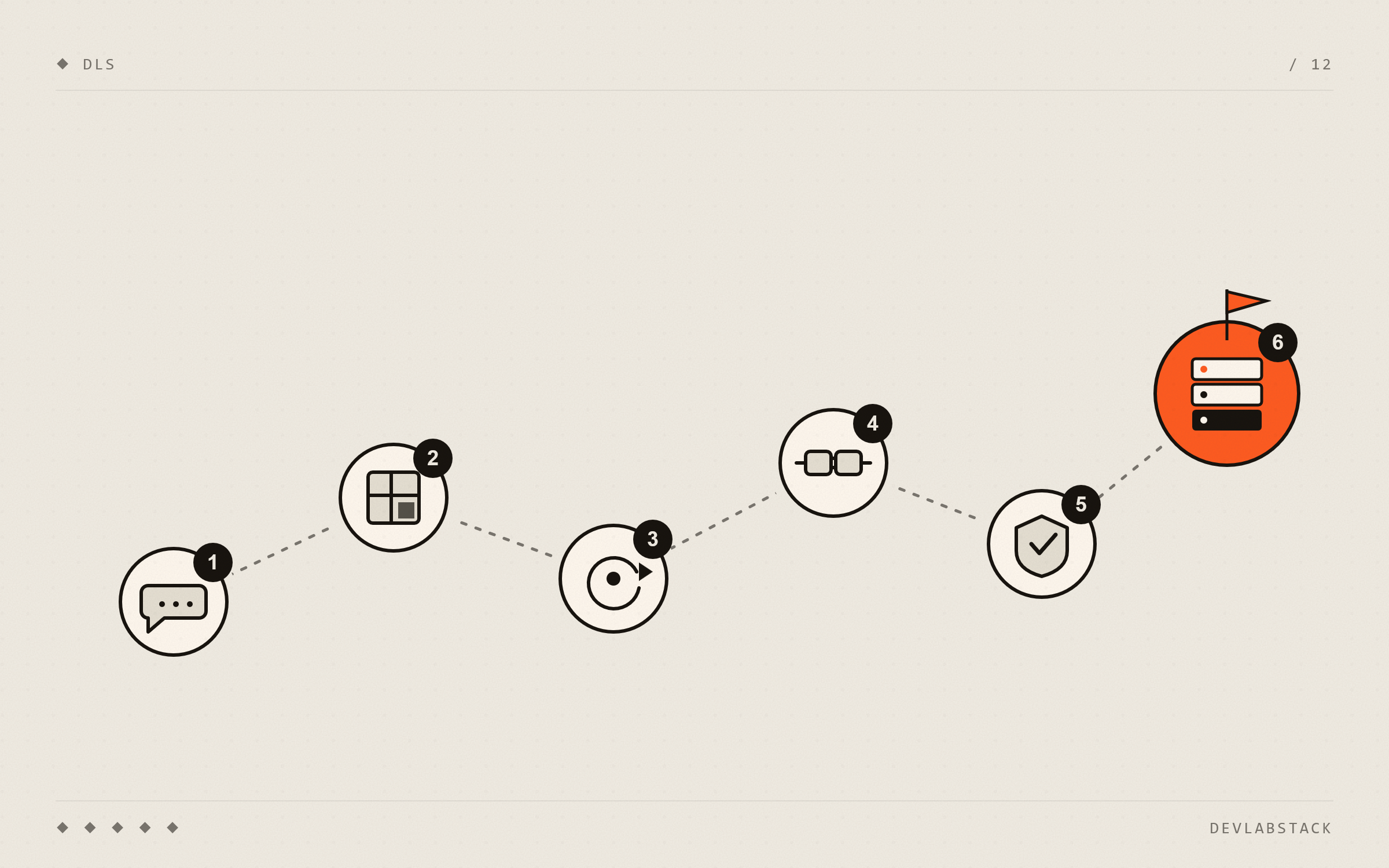
How we build custom software, step by step
This is where most providers stay vague. This is exactly the process we follow at Systemaxo, start to finish.
1. Discovery: understanding the business before the technology
Before we talk tech stack, we talk about your business: how your processes work today, where the bottlenecks are, what systems you already use and what needs to keep running without interruption. This phase includes interviews with the people who will actually use the system, not just whoever commissioned it — they’re the ones who know the exceptions the software has to handle.
The output of this phase is a clear scope: what we build first, what can be added later, and a realistic time and cost estimate — not a number pulled out of thin air.
2. Architecture: designing before writing code
We define how the system will be structured: what backend, what database, how business logic is organised, what integrations it needs and how security and authentication are handled. We prioritise architectures that are easy to maintain and extend — no shortcuts that work today and turn into technical debt in six months.
For web projects we typically use Spring Boot on the backend and React on the frontend, with PostgreSQL or MongoDB depending on the case, but the technology is chosen based on the project, not the other way around.
3. Development in sprints, with real demos
We work in two-week sprints. Every sprint ends with a working demo — real code you can try, not a slide deck. This has two important effects: we catch deviations early, when they’re cheap to fix, and you have constant visibility into what your budget is actually being spent on.
Every feature ships with automated tests. Code that isn’t tested is technical debt disguised as progress.
4. Integrations and data migration
If the project replaces or complements an existing system, this is the phase where we connect both worlds: we migrate the historical data you need to keep and build the integrations with your ERP, CRM, payment gateway or any other relevant external system. We test these integrations with real data, not just sample data, because that’s where edge cases usually surface.
5. Load and security testing before production
Before launch, we run load tests that simulate expected real-world usage, and carry out a security review: authentication, access control, input validation and protection against the most common attack vectors. Launching without this is gambling with the client’s business.
6. Launch and ongoing maintenance
Launch day isn’t the end of the project. We offer ongoing maintenance — security updates, adjustments when your processes or external integrations change, and product evolution based on real usage metrics. A custom system that isn’t maintained ages just as fast as any other software.
How long this process actually takes
- A focused, functional MVP is usually in production within 6-10 weeks.
- A full platform with an admin panel, several integrations and complex business logic takes between 3 and 6 months.
- Large-scale projects with microservices and a dedicated team are planned case by case, with quarterly milestones.
Pricing varies with complexity, but as a reference: Pro-type projects (custom application with REST API, admin dashboard and up to 2 integrations) start at €1,500, and full Business-type platforms (ERP, advanced e-commerce or mobile app with cloud architecture) start at €4,500.
Not everything needs to be built from scratch
Part of a good process is also knowing when to say “you don’t need to build this.” If a standard tool already solves a specific feature well, we integrate it instead of reinventing it. Custom software doesn’t mean building 100% of the system from zero — it means building exactly what creates competitive advantage and connecting the rest to what already works.
If you have a process you think deserves its own system, tell us where your business stands. In the first no-commitment discovery call, we’ll tell you what we’d build, how long it would take and roughly what it would cost.